March 31, 2014, it's 8:30 p.m., I live in a student studio apartment. In a square room is my bed, a wardrobe, and an L-shaped desk made from planks of wood. I turn on the TV and the computer next to it. I don't have a smartphone, but I do have Twitter. I open the web interface and find myself with two screens practically side by side: France 4 (french public TV chanel) on one side, Twitter on the other.
I am about to embark on a new audiovisual experience, one I have been eagerly awaiting for several weeks.
8:45 p.m. marks the start of a 9-hour and 10-minute experiment called Tokyo Reverse. The image shows a man leaning against a graffiti-covered wall. He stands up and begins walking down a street in Tokyo. And he continues walking for most of the night. This experimental film, part of the Slow TV movement, follows a man wandering the streets of the Japanese capital in a single shot. This simple idea is nevertheless composed of three essential elements.
First, the film will be shown backwards; in other words, the main character walks backwards for nine hours, but the film will be shown in reverse so that it appears as if he is walking forwards and all of Tokyo around him is moving backwards. The idea gives the film a strange feel, both in the desynchronization of meaning between the character and his environment and in the characteristic walk it gives this man.
The second unique feature is that the sound will be played live by Luxembourg pianist Francesco Tristano at La Bellevoise in Paris, and also broadcast live on Radio Nova (famous french musical radio). The electro-acoustic work takes the place of the sounds of the city, transporting us into hypnotic soundscapes.
Last but not least, the film is designed as an experience that connects television to Twitter. During his wanderings, the character takes photos of the city and tweets them, sharing messages and his experiences on the network. These elements will be posted in real time on Twitter as the character posts them on France 4.
The whole thing gives the experience a sense of real time, of connection to the character and his long wanderings through Tokyo. The project also becomes a space for experimenting with the distribution of a synchronized multimedia and multi-platform film.
This work has been categorized as part of the 2010s Slow TV movement, a concept that originated in Norway and describes television projects that stretch out over a long period of time and often have no plot. They may involve following people walking, a group of whales during mating season, or long tracking shots of natural landscapes. The idea has not really found an audience in France, but it implies a new way of watching television that reflects on the proliferation of screens and interactions. If television must—by force—make room for smartphones during the broadcast of a film, then we need to think about ways of writing television programs with this in mind. However, the approach here is rather critical and does not favor fragmentation, but rather a gentle (even immersive) narrative form in which the screens intersect occasionally and patiently.
*
It's 2 a.m., and I'm still staring at my two screens. I'm tired, but I can't take my eyes off this disturbing image of walking. I'll end up falling asleep with the television on, occasionally opening one eye to watch the character walking again, finally waking up to watch the last elevator ride and the view of Tokyo from the top of a tower. Then the credits roll, it's 6 a.m., it's Tuesday morning, and the day can begin.
The film received excellent reviews on Twitter but, as might be expected, it was not widely watched on television. However, it is an interesting experiment that uses minimalist techniques to allow us to wander through a strange Tokyo. Similar to a documentary, the approach is quite different and focuses more on the performer's body in a connected urban space. The approach remains contemplative and questions the speed of the world and the consumption of online information (the iPhone and Twitter were only launched seven years before this experiment). The idea of slowing down is at the heart of the film and positions our connected experiences as an opportunity to delve deeper into a universe rather than constantly switching between media and subjects.
*
The film questions a specific aspect of virtuality: its relationship to the actual. It is because of this specific aspect that I am writing about this film today.
“In strictly philosophical terms, the virtual is not opposed to the real but to the actual: virtuality and actuality are simply two different ways of being.” This quote from Pierre Lévy (1998) provides an analytical introduction to what happens in Tokyo Reverse. The virtual is that which exists in potentiality, which must be activated. The actual, on the other hand, is the potential or virtual part that has been activated, which now exists in action. Here, the film is pre-recorded and is actualized as a linear structural medium from which music and tweets emerge. The latter are the actualization of the project in real time. Accompanied by the reverse video effect, the whole work broadly questions the intersections of temporality specific to virtual spaces. There is not the virtual on one side and the real on the other, there is the virtual on one side and the actualization of a potentiality on the other.
This is how the virtual world makes sense, intertwined with our existence, complicating our relationship with time and space.
The Tokyo Reverse experience is a first approach to a non-interactive, non-interfaced medium. However, it raises pertinent questions about these possible narrative spaces, greatly complicating our relationship with reality and, in this case, with time.
Watch the complete movie Tokyo Reverse.
Pierre Lévy, Qu'est-ce que le virtuel?, Paris : La Découverte, 1998, 153 p.
Wikipedia of the project Tokyo Reverse
Wikipedia of the concept of Slow TV
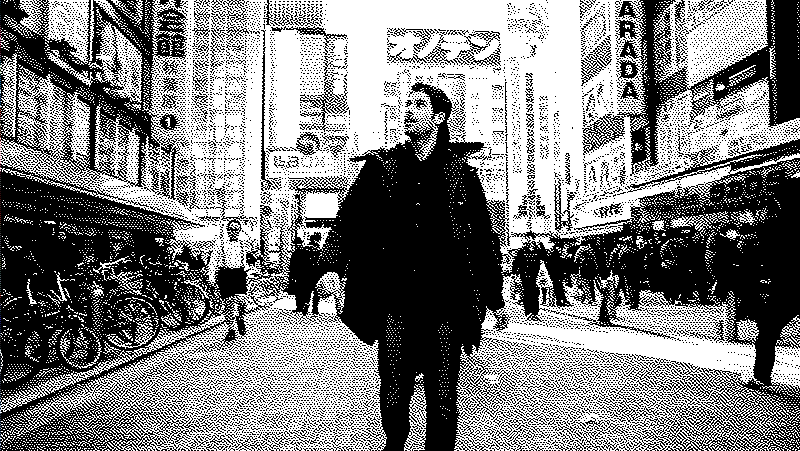
FIG 01. Såndl (Simon Bouisson and Ludovic Zuili), Tokyo Reverse, 2014