Created in 2013 by artist-avatar LaTurbo Avedon, Panther Modern Gallery is one of the pioneering projects in online exhibition spaces. Even more interestingly, the artist's idea is an alternative form between 3D space and website. The gallery is not just a website, as the projects on display are displayed in three-dimensional spaces whose architectural characteristics are essential; nor is it an open 3D world, as the renderings are in formats chosen by the artists, in independent links on the web.
This unique format draws on LaTurbo Avedon's many years of experience working with and in virtual spaces. Using multiple avatars, they present performances, films, and sculptures that are now exhibited in some of the world's leading institutions (HEK Basel, Centre Pompidou-Metz, Panke. Gallery, The Whitney Museum, Julia Stoshek Collection, Koening Gallery, and MUTEK Montreal). Their work explores relationships with identity, gender, and others in a profound artistic examination of digital spaces (particularly video games).
In a 2016 article, LaTurbo Avedon describes this gallery project in one of the very few texts on the subject, particularly from its author. In it, they raise two points that are essential to understanding this project, which we will analyze here: the artist's unique relationship to the art world and its ecosystem on the one hand, and their relationship to architecture and the physical properties of 3D environments on the other.
1/ Liberation of the artistic ecosystem
In the article, LaTurbo Avedon describes a complex relationship with the art ecosystem. Not in terms of rejecting institutional forms, but rather in terms of complementing, disseminating, or working on forms that are difficult to display. The artist subtly highlights a number of points that they wish to develop through their gallery.
First, they point out a disparity between the forms produced, their rapid and dynamic diffusion on the internet, and the gap with exhibitions in institutions (text from 2016, I remind you). I quote: “It will take time before these works can find an appropriate place in physical museums and collections, which makes it even more urgent to create channels for viewing and understanding them.” More militantly, they also state, "I wanted to do away with exhibition parameters, the financial, practical, and political restrictions that can shape the outcome of an artist's projects. " The two pieces of information overlap in an idea of spontaneity—quite specific to online networks and creations—which allows for an acceleration of the dissemination process. Panther Modern is a home, a place that welcomes artists, to whom LaTurbo Avedon provides a dedicated room that they can explore at their leisure.
The artist raises one last point: the fear of missing out, of not seeing the artworks. This is an interesting question because it repositions the notion of accessibility of works in the digital realm, which the Internet struggles to resolve. To quote them again: "A big motivation for starting Panther was the fear of missing out. There are so many exhibitions that we miss due to lack of time, financial means, or because they are held far from where we live. You can find a catalog in a bookstore, or discover the installation through an image search, but most exhibitions are held and then disappear. Art objects are scattered throughout studios, apartments, and collections. I wanted to create a space that could solve some of these problems, using an installation connected to an digital file as a way to keep the works accessible."
This point also relates to the specific nature of this work, which introduces our next section. How can we produce an online digital structure that can support this idea? What forms? What location, what architecture? Above all, what modularity and for what accessibility?
2/ Architecture without physical properties
This is where we get to the heart of virtuality and the design of Panther Modern. Following on from the previous point, LaTurbo Avedon notes that they want to set up this project to have a place that “doesn't require any physical space, giving as much creative freedom as possible.” But beyond institutional and financial freedoms, the artist describes an interest in designing 3D spaces and architectures that induce new paradigms of working with artists. They formulate their hypotheses and issues as follows:
“What would be the role of architecture in a space without physical properties? How would the room be shown? It is this sense of uncertainty that continues to fuel my interest in virtual installations; each new piece is an opportunity to redefine the source files that are provided to artists.”
Let's go into detail, starting with the leitmotif indicated in the “About” tab on the gallery's website: « Panther Modern is a file-based exhibition space, encouraging artists to create site-specific installations for the internet. »
Let's start with the architectural concept behind this sentence. Panther Modern is designed, as mentioned above, to reflect architecture that has no physical rules. LaTurbo Avedon designs her gallery in 3D, block by block, each of which has an interior space offered to an artist. Each block has its own interior and exterior architecture, and the building as a whole evolves with each new artist invitation to resemble a paradoxical assembly of boxes, resembling both architecture and sculpture (Fig. 01). Beyond the walls, the artist emphasizes the absence of physical rules in the building; his 3D world is free from any material specificity. The only limitation is that artists must work from the room provided. As we will see later, they then take ownership of the space, sometimes attempting to push its architectural and logical boundaries. This world without rules is at the very heart of LaTurbo Avedon's project. The gallery is a dynamic, fluid space that evolves as participants contribute to it and has no other characteristics than the initial design of its exhibition rooms, which are themselves conceived as forms to be explored by artists rather than as boundaries or walled spaces.
The architecture is also accompanied by a technical component structured in files. Each artist receives a 3D file containing the room they will explore as their exhibition space. Artists can use it as they see fit and, above all, reproduce it in the format of their choice (3D file, images, videos, etc.). The result is displayed on the gallery's website, and the public also sees an HTML file that hosts the project, even when it is deployed in other instances. The relationship to the file is not just a technical issue; it attests to the total freedom of the artists in the spaces provided by LaTurbo Avedon and also allows for the archiving and preservation of artistic proposals, and even the evolution of the works over time (I don't believe there is an example of this at present). The final format is very easy for the public to access, while offering immense freedom in terms of creation and spatialization of the pieces. The works themselves will be named after the number of the piece that hosts them.
3/ Some examples
In 2014, artist Oliver Haidutschek was the first to take over the gallery and develop a project for Room One. The space is rectangular, with one side of the room featuring large windows that let in sunlight and offer a view of the outside, while the opposite side overlooks a raised corridor separated by a wall of rectangular bars, which also allows light to filter through. The artist decided to fill the main rectangular room with an organic sculpture (made of inflatable plastic pools?) in three layers, placed on a slightly wavy plate whose surface resembles rusted metal or copper (Fig. 02). The whole thing catches the light and shines slightly, like low-quality plastic. The sculpture signals its artificiality while offering a realistic and plausible staging. The angular, rectangular architecture of the room contrasts with the round shapes of the sculpture.
In 2015, Kim Laughton worked on Room Eight (Fig. 03), a large room with high ceilings, lit by sloping windows, and equipped with a mezzanine formed by concrete columns. A sort of post-digital white box, the space feels as much like an exhibition hall as it does an Apple office. Kim Laughton decided to reinterpret the space as such. He transformed it into a closed art gallery, in the process of being set up (or taken down) for an exhibition. Empty, freshly painted pedestals protected by security cords, work tables, unopened boxes, stacked canvases, and screens still lying on the floor. In the middle of this barely unloaded exhibition, one work appears to be already installed on its pedestal, but still protected by a semi-transparent plastic sheet. We can make out what is presumably Kim Laughton's sculpture, perhaps a bronze, hidden under the fabric that barely outlines its silhouette. The whole scene is worthy of an excellent liminal space, abandoned a few minutes ago by the technicians or decades ago, the place frozen in time, its space stuck between renovation and ruin.
Also in 2015, Mark Dorf took a completely different approach in Room Nine. His space was more confined and centered around a room pierced by two slits forming two light openings, with two portholes on the wall (Fig. 04). The other side of the central room opened onto a walkway (Fig. 05). The artist distorts the perception of space. On one side, he accepts the limited space, quietly fixing large, colorful sculptures depicting a series of faces to the wall and using the two portholes as views of enclosed spaces in which trees grow. But on the other side, the walkway seems to lead to an infinite space, both exterior and interior, combining rock, luminous planes, and plated textures. The space resembles a poor science fiction set, and yet the homogeneity of the 3D disturbs our understanding of the place. The artist oscillates his forms between the immense and the restricted, between volume, flat surfaces, and plays of light.
A final example is Claudia Hart's 2015 work in Room Thirteen. This is a small room with a high ceiling, which is open to the sky, and one side of the room also opens onto the outside. The space is more like a patio than an exhibition hall, situated between indoors and outdoors. The artist exhibits an installation of colorful and shiny fictional plants composed of a grassy area, a purple tropical tree, groves of breadfruit trees, and a giant orange flower (Fig. 06). The whole thing overlooks the exterior view of a snow-covered fir forest made from an image plastered onto a flat surface. The ensemble depicts a natural setting, an (ultra) artificial patio offering us a somewhat uncomfortable haven of peace. The proposal is powerful and also questions the place, its interior as well as its (fake) exterior, offering us a fictional global context staging a lifeless nature, frozen in this gallery-file for eternity.
4/ Conclusion
LaTurbo Avedon's proposal is powerful and nuanced. They suggest examining the digital space as an opening while revealing its artificial nature—its virtuality, in fact—in that the place exists only as a series of files to be updated, as traces to be saved on a hard drive. At the same time, the Panther Modern Gallery intervenes in the game of conservation: what constitutes a work of art? For what audience? And how can this exhibition experience be preserved? Or even provide the same experience to all viewers, without technical or physical limitations, without interruption or end. As they suggest, this is indeed in situ creation for the internet. Playing on the ambiguity of working in a 3D world, but also at the heart of a server, at the heart of the very materiality of the web, in a here and everywhere, in an architecture that is both fixed and fluid. The nature of virtual worlds is revealed here in all its complexity, strangeness, and fundamentally human character.
A virtual gallery to update, again.
LaTurbo Avedon, "LaTurbo Avedon – Panther Modern et les expositions reliées à des fichiers électroniques", in ETC MEDIA, (108), 2016, p.50–57.
Link of the article: https://www.erudit.org/fr/revues/etcmedia/2016-n108-etcmedia02639/83107ac.pdf
Link of the gallery Panther Modern
Website of LaTurbo Avedon

FIG 01. 3D view of the Panther Modern Gallery
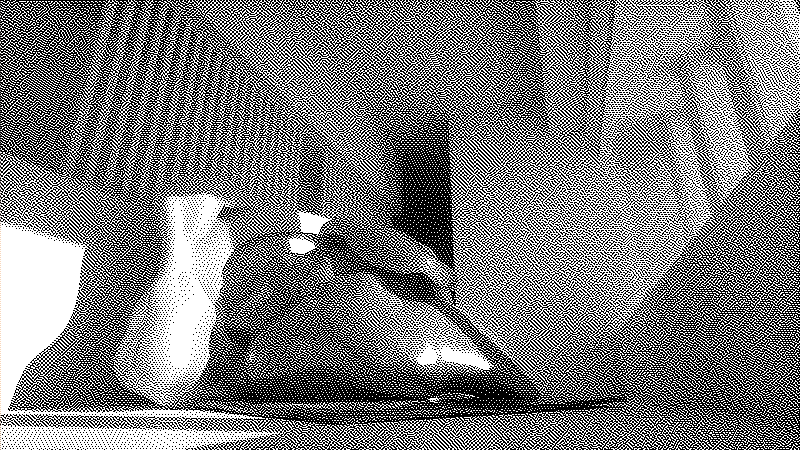
FIG 02. 3D view of the sculpture of Oliver Haidutschek, Room One
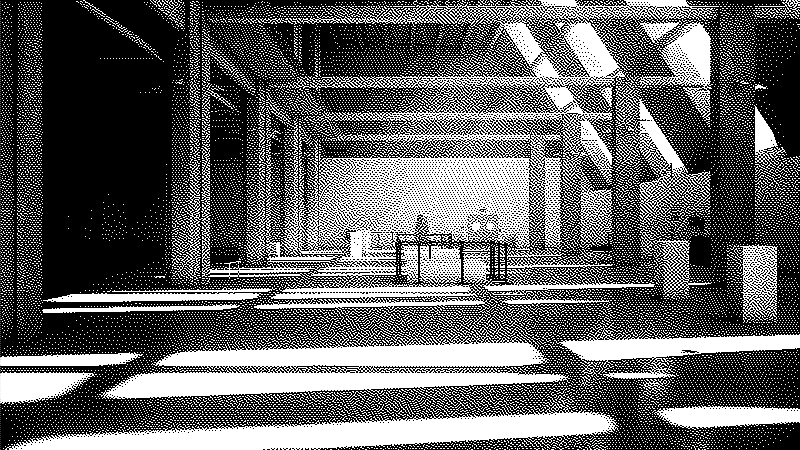
FIG 03. 3D view of Kim Laughton's installation
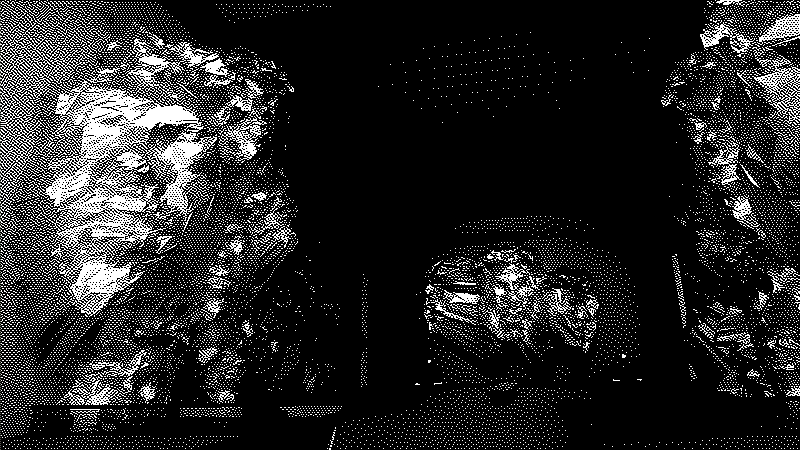
FIG 04. 3D view of the first room of Mark Dorf's installation
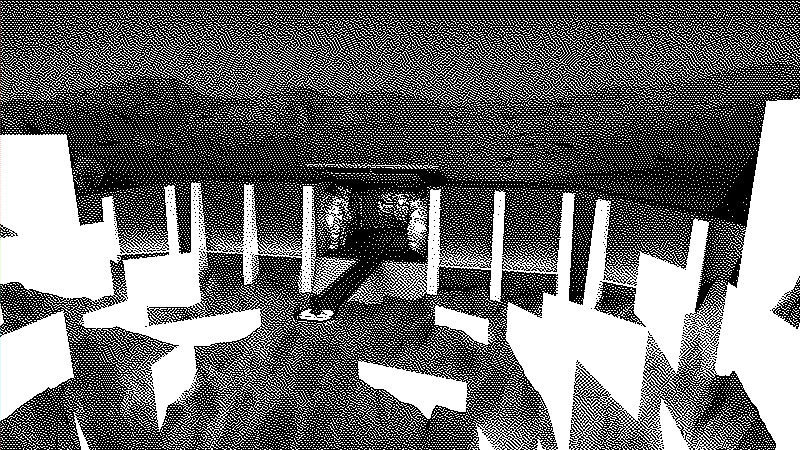
FIG 05. 3D view of the whole two rooms of Mark Dorf's installation
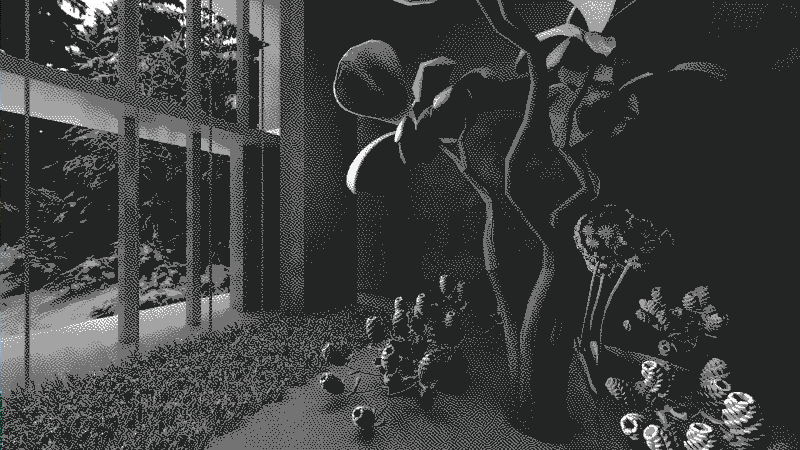
FIG 06. 3D view of the room of Claudia Hart, interior and exterior