A few minutes after an Israeli strike on Tehran, the newspaper Le Monde launches a “live” page to provide real-time coverage of the devastating day of February 28, 2026, and the days that followed.
We've been preparing for this event for several weeks, but here we are!
7:39 a.m.: Good morning and welcome to this live coverage of Israel’s “preemptive strike” on Iran
War between the United States, Israel, and Iran—or even the entire Middle East—has broken out. In a matter of seconds, we go from “smoke in the skies over Tehran” to every city in the country being bombed.
And the first images…
We’ve long been accustomed to this; ever since September 11, 2001, we’ve been inundated with images of war, bombings, and genocide. As if to keep a latent fear alive, no doubt—stay well-behaved, above all, consume our images on your screens, but just settle for liking our propaganda. A continuous stream of violence interspersed with advertisements. Brutality keeps us frozen in place, and thus has value. Since the start of the war in Ukraine and the genocide in Gaza, these images have become an integral part of our daily burden—this weight of fury we carry in place of our leaders, accompanied by our overwhelming inability to react. We can only watch the spectacle; it even seems that this is the goal of this algorithmic feed—to make us impassive, insensitive, and numb to the reports of children being killed, to their endless list.
The artist Marianne Mispelaëre captures this phenomenon well: “We can all be awakened to contemporary terror; we have the technological, historical, and philosophical capacity to do so here and now; awareness is within reach for those who choose to engage with it. But our eyes are so exposed to images of violence that they generally no longer provoke much in us; their accumulation has diminished their effect. They flash quickly before our alert eyes. We see without seeing the images scrolling across the screens. It is then that an image, sometimes, awaits us.” (see the text Feeling Watched by Violence in the footnote)
But in this text, she offers us a way out—not to flee, but to fight: “That is when, sometimes, an image awaits us. ” She will do so in her collective performance piece No Man’s Land, inspired by an image of migrants in Calais with hands marked by white burns raised toward the sky. Collective gestures, a shared experience, close to the body to step away from screens, to better understand—or at least to feel.
Yeah, but here’s the thing… for me, Tehran is home, family—my partner’s family—birthdays, parties, coffee shops, projects, walks, and roasted corn in the parks.
I know these landscapes, I know this city; I recognize the buildings and the storefronts. Amid the thick smoke from the bombs, I know some of the names.
And the timeline is punctuated by phone calls, trying to find out if everything is okay over there—so far away, yet so close.
So we watch the timeline—Le Monde’s, Instagram’s, BBC Persian’s—and carefully examine the images to see if we recognize the streets, or hopefully not. We send messages, sometimes video calls—when the internet blackout isn’t being used as a weapon of war.
The violence is palpable—at a distance, yet far away, yet close, yet not quite.
1:00 p.m.: Forty dead at a school hit in southern Iran
Children, again and again! Oh, wait, sorry—actually, it was sixty-three dead and ninety-two injured, then 108 dead two days later. After all, it often happens that you miss your target.
And we'll keep going.
The experience of extreme violence, viewed from a distance, behind a screen that scrolls endlessly. Then the repugnant and irresponsible rhetoric of political leaders around the world. Then the comments—ranging from kindness to hatred to pointlessness—nothing seems quite right.
All of this is punctuated by everyday life: meals, children’s games, the park, work, and hours spent scrolling. We now experience conflict in the midst of a post-digital era. These conflicts haven’t morphed into a digital war to spare lives—quite the contrary; instead, we experience them as a hybrid phenomenon. A new form of psychological violence.
The timeline quickly becomes an endless scroll of images, an ultra-documentary that plays on our emotions. I quote artist Filipe Vilas-Boas, who explores this phenomenon in his project My Timeline is on Fire (the title of this post is, in fact, inspired by the name of this video): “Information is now produced, disseminated, and stored collectively, which increases the overload on our timelines and data centers. How does this affect and distort our world and our emotions? How does it transform our experience and perception of reality? What are we going through emotionally, medially, collectively, consciously, and unconsciously? What can we discern from the ashes of a local and global phenomenon?”
*
A few days later.
Always the same waves of images. More violence—physical, textual, verbal, auditory. More intensity. More fear.
The smartphone always plugged in, day and night, the screen’s light shining on the face. The body is tired, kept on its feet by notifications and obligations. Angry at the sickening violence of a few people who have never been brought to justice. Fed up with this virtual, linear, endless, and detached re-reading.
Watching violence from above and below to stay informed, but above all to stay connected, so as not to lose touch—even if only virtually.
Link of Le Monde's Live page
Filipe Vilas-Boas, My Timeline is on Fire, 2019. Project here
Mariane Mispelaëre, Se sentir regardé par la violence, 2017-2018 : read here
Mariane Mispelaëre, No Man's Land, 2014-2016. Project here
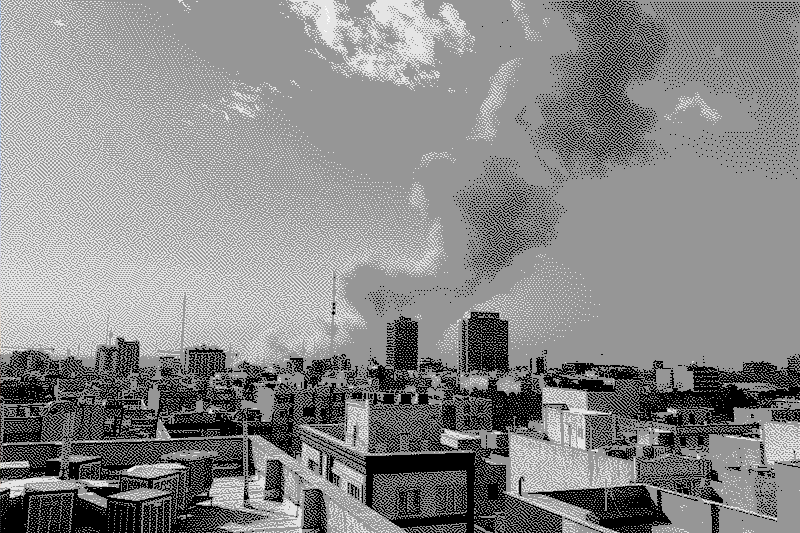
FIG 01. Photograph of smoke rising above a neighborhood in Tehran, image published by Le Monde, February 28, 2026