13 Scores Against Tech Fascism … this is the stated purpose of this gray, minimalist website, covered in large serif text that appears when the mouse hovers over it, leaving an indelible white trail on the page’s background. The design reflects its title: raw, responsive, it leaves traces and demands to be activated—a bold graphic statement that introduces artistic, technical, and (h)activist proposals that are just as bold.
This exhibition will also be on view at the online gallery between January and February 2026 Error 417 Expectation Fail (Fig. 01) — a curatorial project led by the Swiss collective !Mediengruppe Bitnik and Heiko Schmid. The exhibition also has a physical version at the Lothringer 13 Halle of Munich (Fig. 02), as part of the exhibition Antifascism: Now. This text is a reflection on some of the projects presented, as well as on the format of this proposal.
Thus, the exhibition 13 Scores Against Tech Fascism is, as its name suggests, a webpage presenting thirteen artistic, technical, and even (h)activist proposals to combat technofascism. The exhibition is intended as a technical, conceptual, visual, and humorous guide to fighting this anti-democratic and technological seizure of power. Here is an excerpt from the exhibition’s introductory text that summarizes this point:
"Tech Fascism is understood here as a power structure and as systems of control, exclusion and manipulation that have reached a distinct quality with the emergence of current technologies. From surveillance infrastructures and algorithmic decision-making to behavioural prediction systems and emerging AI, fascist logics are deeply embedded in the tools we interact with daily. By imposing exclusionary ideologies and elitist mindsets while standardising ways of thinking, expression, and participation, technology reinforces hierarchies, linking technological proficiency with social worth, often along racial or class lines. These systems decide who gets to participate and who gets left out, limiting agency and representation.
Within the exhibition, the score becomes a site of agency. Manuals, how-tos, and instructions hold emancipatory potential. The open-ended and procedural character of instructions is emphasized, inviting visitors to interpret and improvise, to reclaim autonomy and space from commodification."
The exhibition is structured as a diptych: a visual and/or narrative, or even technical, proposal (referred to on the website as “Projects”), always accompanied by a practical guide consisting of a list of instructions more or less directly related to the project (referred to as “Scores”). Each artist or collective is asked to propose a project and to write these Scores in relation to their proposal. It is within this structure that the project is grounded as much in an aesthetic exhibition experience as in a manifest and activist proposal. This exhibition offers a reinterpretation of art’s place in our societies, a visual concept in action that positions art as an object of resistance in times of crisis and in the struggle against fascism. Here, the proposals offer as many imaginaries as they do solutions. Above all, the project is built on a physical and virtual association, linking the two in a strong relationship of virtuality, potential, and activatable present (read blog 010 on these issues). The virtual space here is real and tangible, but also activatable and shareable for a form of plastic and underwater resistance—a new artistic force in the face of an increasingly aggressive and globalized technofascism.
It is in this context that the first project presented is conceived, as a blend of artistic proposal, technological defense response, and mythological reflection. This work is titled Mij (The Fog) (see Fig. 03) and was developed by the Rojava Center for Democratic Technologies collective, founded by Dani Ploeger. The project’s Score is: “How can one defend oneself using mythical technology? ” As stated in the Score and in the project, the idea behind this work is to “build a low-tech weapon endowed with mythical power. This project is a mobile defense system against semi-active laser (SAL) missiles, such as the Turkish-made MAM-C, developed for use on moving vehicles. Drawing inspiration from the principles of the Rojava Revolution, it combines readily available technology with the Sumerian myth of Anzû. Anzû is an evil bird that stole the Tablet of Destinies from the gods and thus gained power over the world. Ninurta, the god of thunder and mist, then defeated him by approaching through the fog and taunting the bird until it was exhausted. The project takes up the narrative of this myth and transposes it as a technological tool for missile disruption. Anzû represents the ballistics used by the Turkish military; Ninurta is a 3D-printed sculpture capable of detecting the presence of MAM-C missiles and releasing a mist from its mouth to jam the missile and render the presence of a vehicule invisible. The project takes the form of a video and documentation of the creation and use of this mythical, defensive sculpture. In the Munich exhibition, the sculpture is displayed in a white case whose lid is covered with instructions for using and mounting the device on a vehicle. Straddling the lines between sculpture, video, performance, and defensive activism, this project explores the potential of using forms of representation and storytelling as a means of responding to attacks. As in many of his projects, Dani Ploeger presents a profound work that examines the brutality of war and surveillance technologies, as well as a certain poetry of resistance.
In this vein, the artist kunsf.xyz presents the project V-Ball (Voiceball) (see Fig. 04), a DIY throwable tennis ball equipped with a mini-speaker, designed to play a looped audio recording. It is a low-tech, open-source, and unconnected object that amplifies voices silenced by censorship, surveillance, and oppression (I am partially paraphrasing the project description). This project is shared as an open-source artwork and educational resource in the public domain. It aims to explore the relationship between technology, sound, and resistance as a critical and artistic statement. This project is presented as a tutorial for making V-Balls. In its exhibited version, a ball is suspended about 1.2 meters above the ground; it is displayed both as an example and as an object frozen in motion. The ball broadcasts protest sounds, amplifying and distorting their source. The project, very simple in form, fits into a vocabulary of peaceful struggle and a minimalist aesthetic.
The artist Alexey Boriskin works on the premise that technology is both personal and political. In his project Starry Heavens Above You (Fig. 05), he documents a series of actual job interviews conducted by the artist at technology companies operating in ethically controversial fields: cryptocurrency trading, high-frequency trading, and cybersecurity, in connection with Russian state-owned enterprises. During these otherwise standard recruitment interviews, which focused on qualifications and compensation, the artist introduced questions about Kant’s categorical imperative, specifically regarding whether one should act only according to principles that could become universal laws, and how these moral frameworks might apply to the work carried out by these companies. These questions serve as titles for the various videos presented by the artist.
Each of them reenacts a video interview on Zoom, fully anonymized—with company names and personal identifiers removed—and all dialogue has been reenacted by actors.
The Score accompanying this proposal describes the protocol used to carry out this project:
- Assume that the technological is personal is political.
- Trace the technological that passes through you, as the political does.
- Notice where these currents converge.
- From that point, name a principle you wish to be held by.
- Break this principle in a way that strengthens it.
The idea being to position oneself as an individual facing complex and large-scale enterprises. It is also about positioning one's body against a machinery to resist. The project questions here a scale relationship, not only between David and Goliath, but especially about facing intangible giants, companies with a difficult-to-grasp materiality, putting into perspective this relationship with the Internet, the web, the supposed cloud.
The site continues to unfold thus, jiawen uffline proposes to dirty his personal data to make it unusable by AI (Fig. 06), Annika Santhanam develops a script for hijacking public advertising calls to redirect them to the telephone servers of the American immigration police ICE (Fig. 07), David Huerta proposes a rocket-propelled device designed to launch a Wi-Fi de-authentication attack on the network used by the White House (Fig. 08), Not Today develops a media hacking project against the far-right (Fig. 09), El Proyecto Sonidero develops a manifesto and a protocol for spreading sonidero dance outside of Mexico as a method for producing commons in public space (Fig. 10), the collectif permacomputing.net presents its protocol for creating permacomputing collectives (Fig. 11), Enkaryon Ang questions the poor translation of the Taiwanese language which relies on using Mandarin as a base (Fig. 12), Signal Rising explains its community-driven and open-source mesh network project that perfectly responds to the needs of specific communities (Fig. 13), Gabe Nascimento presents the book Nunc Mais (Antifa Recipes) (Fig. 14), a collaborative work focused on dialogue that reflects on the history of Brazil and proposes strategies to counter current techno-fascist and antidemocratic movements, and 868lab exposes its 868wearables (Fig. 15), a project dedicated to developing customized open-source communication equipment for decentralized peer-to-peer networks that proposes new graphic forms and interfaces.
These thirteen proposals explore an active, aesthetic, and critical field of technofascism, shifting perspectives on and uses of technology, and employing the web as a responsive medium. The exhibition, in its web-based form, plays on the ambiguity of its subject matter and questions the role of the decentralized web in the dissemination of alternative visual art projects. Although the exhibition was presented in a physical space, it is structured and conceived for the web, built around text and its layout. The written word is the core of the proposal; it is its critical substance, and its plasticity is essential to the exhibition’s aesthetic. The exhibition broadly examines the web’s role in disseminating artists’ projects and the role it can play when these visual forms involve protocol, text, activation, interactivity, and file sharing. It highlights what we are beginning to study as “file art” (a blog on this subject is currently being written). The virtual space is here the center of the work, the visual and display medium, the critical material, and a form of sharing governed by new rules.
Link to the exhibition
Link to the Error 417 Expectation Fail gallery

FIG 01. Website of the online exhibition 13 Scores Against Tech Fascism, 2025
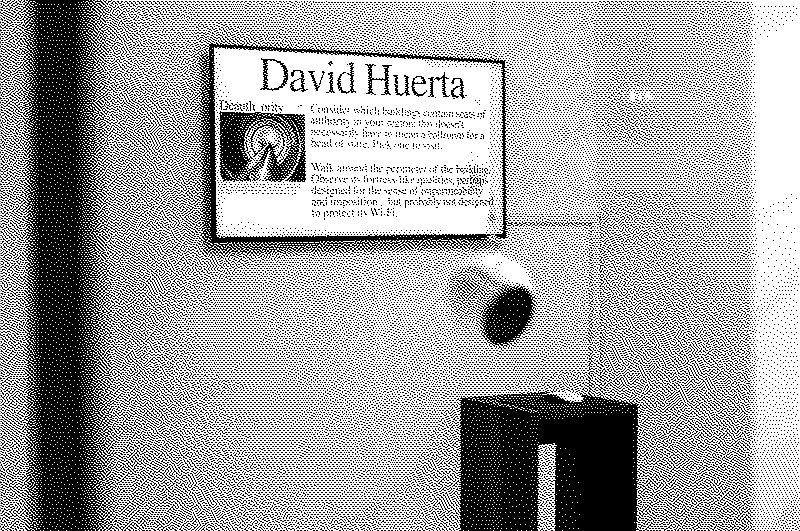
FIG 02. View of the exhibition in Lothringer 13 Halle of Munich, 2026.
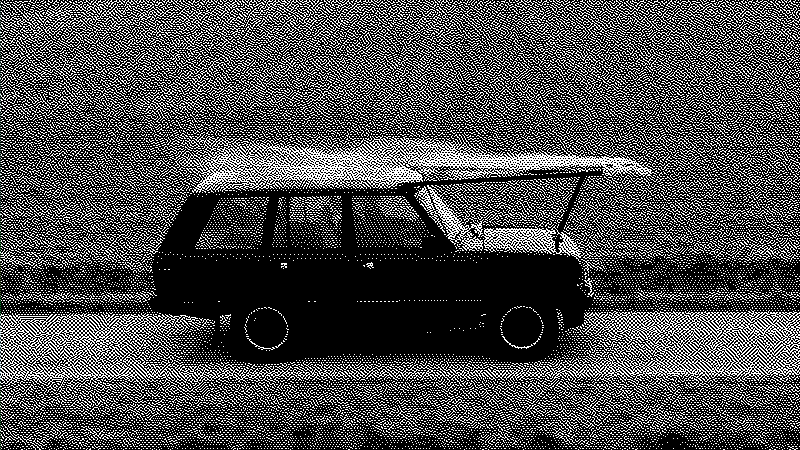
FIG 03. Image of the project Mij (The Fog), by Rojava Center for Democratic Technologies Collective, 2025
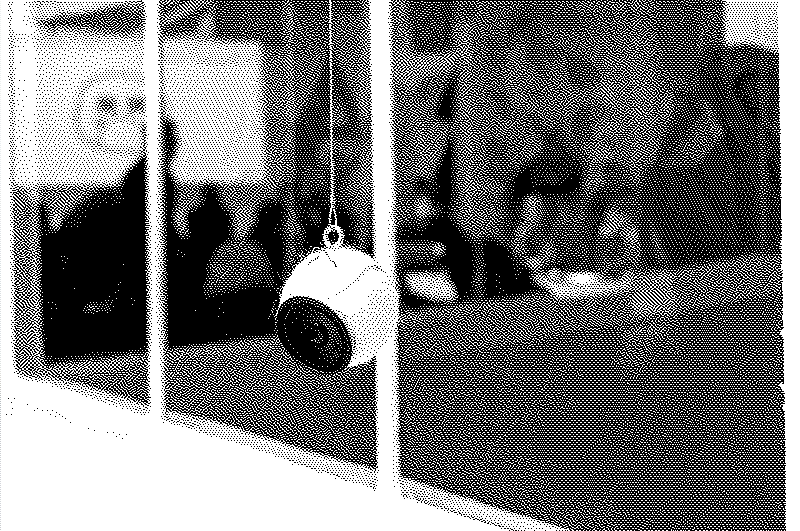
FIG 04. Project V-Ball by kunsf.xyz, 2025
FIG 05. Extract of the video Starry Heavens Above You by Alexey Boriskin, 2025
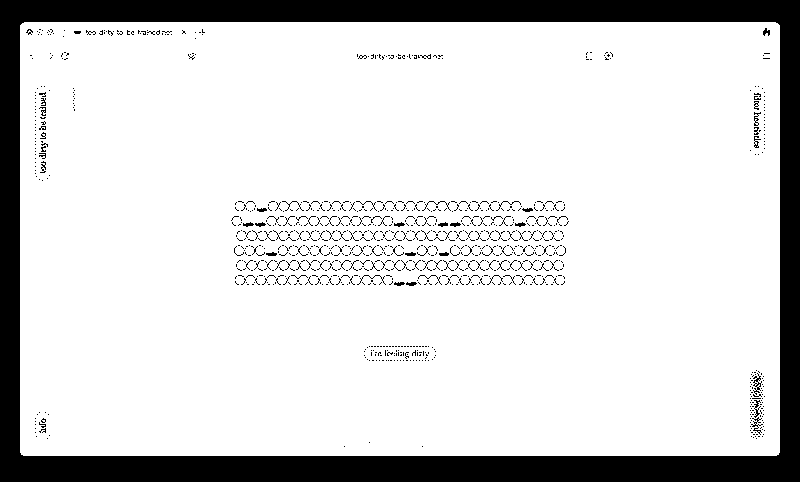
FIG 06. Web interface of the project sorri, my data is too dirty for your model by jiawen uffline, 2025

FIG 07. Interface displaying Annika Santhanam's project and telemarketing spam, 2025
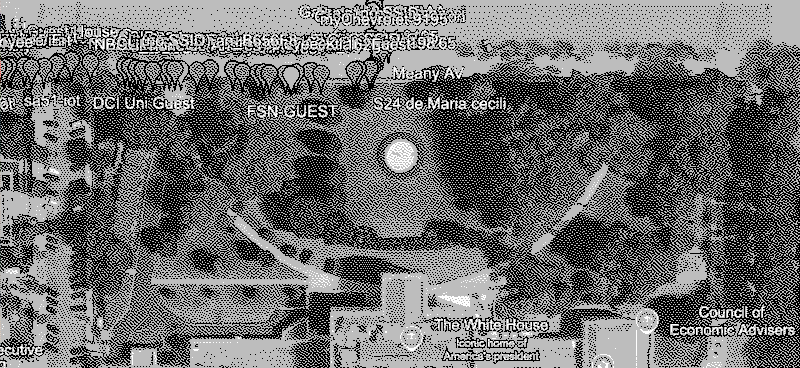
FIG 08. David Huerta, satellite view of the White House from the platform, 2025
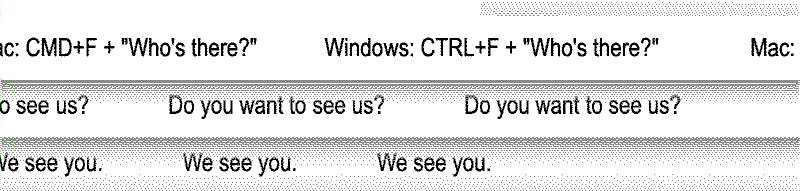
FIG 09. Excerpt from the web interface of Not Today, 2025
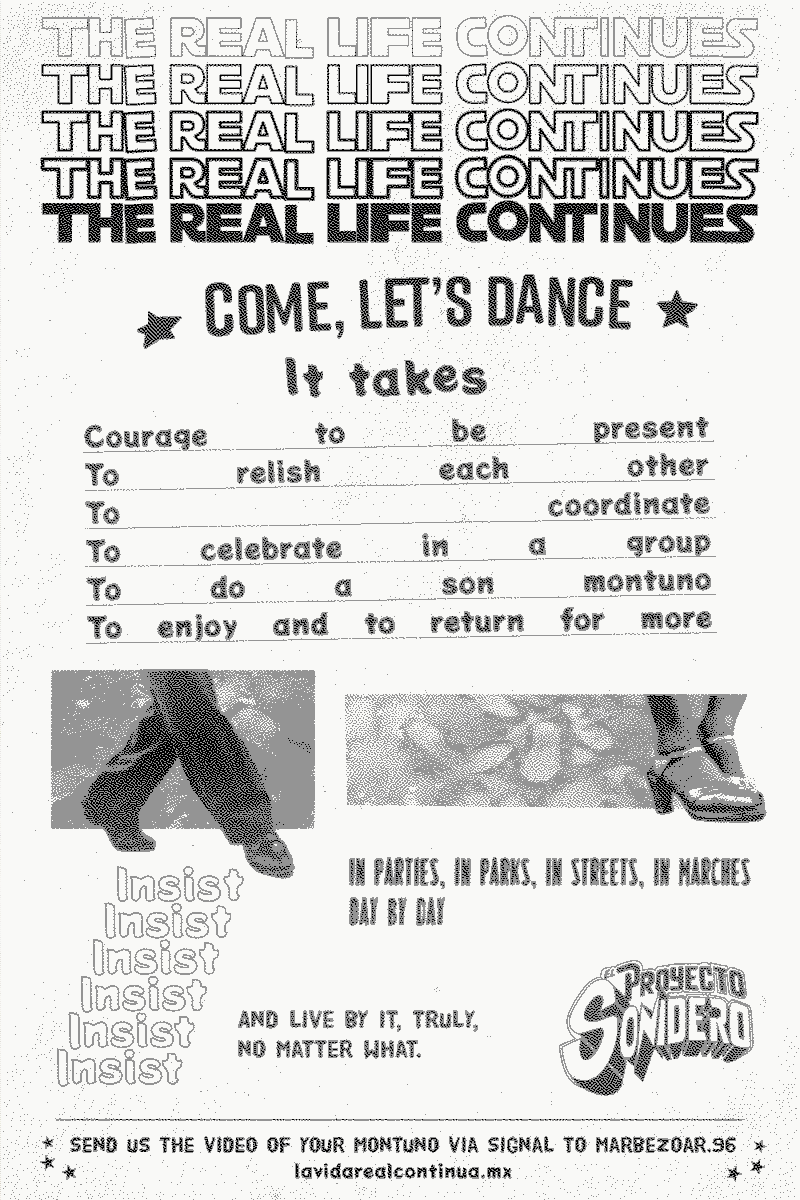
FIG 10. Poster of the project El Proyecto Sonidero, 2025
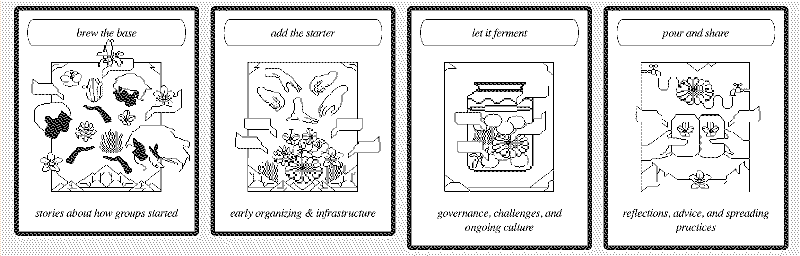
FIG 11. Screenshot of the Permacomputing interface showing the steps for creating a collective, 2025
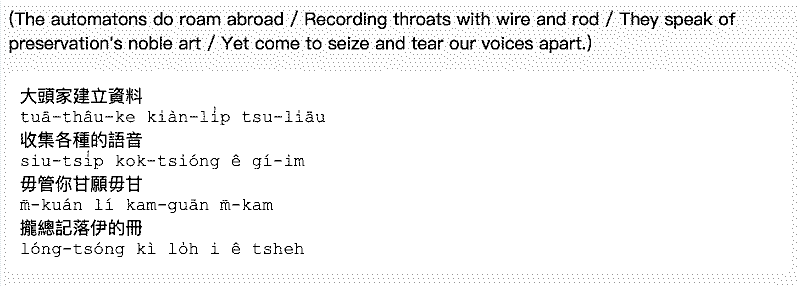
FIG 12. Excerpt from the translation of Enkaryon Ang, 2025
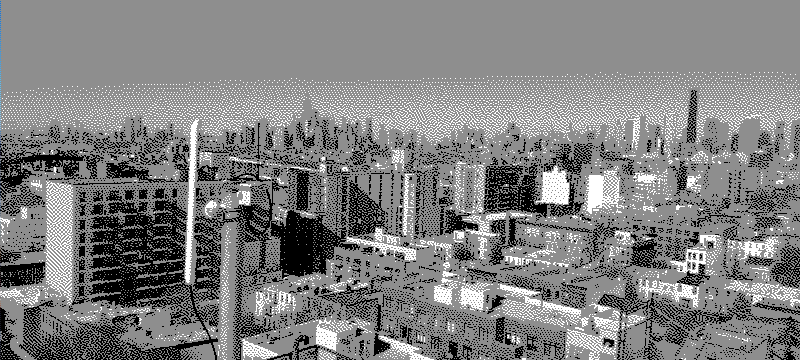
FIG 13. Project overview image of Signal Rising, 2025

FIG 14. Edition by Nunc Mais (Antifa Recipes), 2025
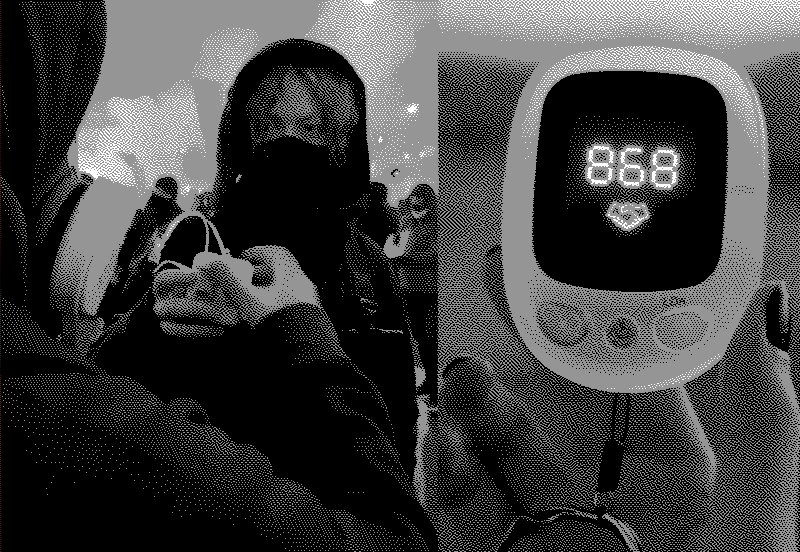
FIG 15. Photography of the project 868wearables, 2025